








Passing the CISSP: My Study Journey and Exam Experience
Introduction
I sat – and passed – the CISSP exam.
Passing the CISSP was no small feat. I spent approximately 140 days studying, working through a range of study materials before I felt confident enough to attempt the four-hour exam.
I passed on my first attempt at question 145, with around 50 minutes remaining.
Looking back, the experience reinforced something I had heard repeatedly while studying: the CISSP isn’t simply about memorising technical concepts. Understanding how ISC2 expects you to approach problems and make decisions is just as important.
Studies
I began my CISSP journey in November 2022 with the Destination Certification Masterclass.
Of the study material I looked at during my preparation, the Masterclass stood out considerably. It presented the material in a way that was concise, structured, and easy to understand.
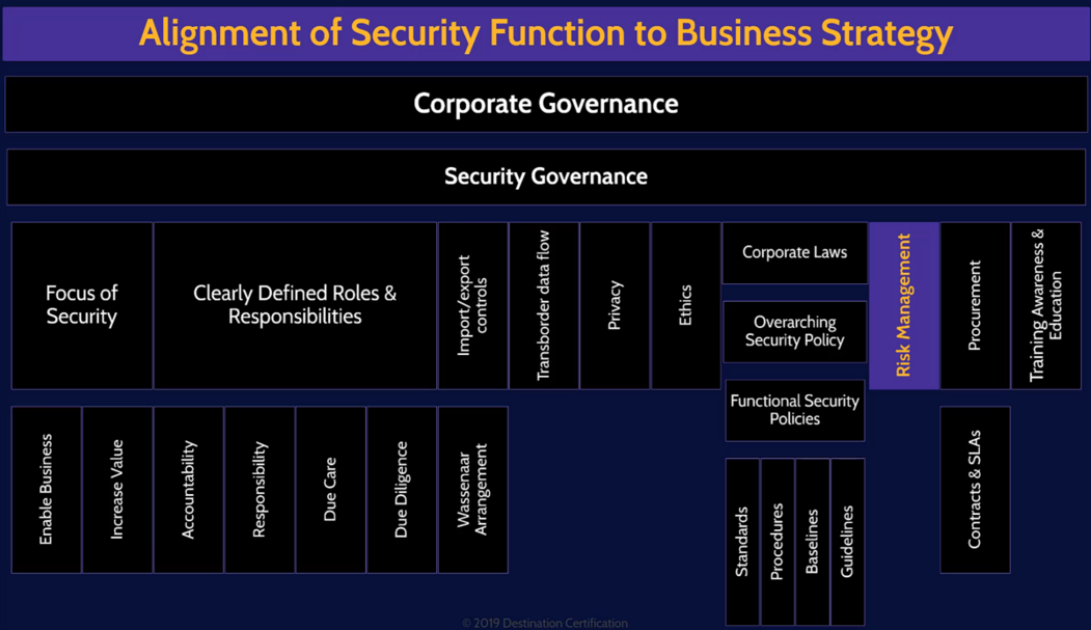
One of the things I particularly liked about the course was how clearly it explained what you actually needed to understand for the exam.
Rather than focusing purely on memorisation, the material gradually encouraged you to approach questions from a management and business-risk perspective – essentially teaching you to “think like a CEO” without necessarily realising you were doing it.
The course videos generally ranged from around 5–20 minutes, with each accompanied by a written summary and easy-to-digest diagrams. There were also multiple end-of-domain knowledge assessments covering the most important areas, followed by an end-of-class practice exam.
Throughout my preparation, my tutor Lou was also available to provide guidance as part of the Destination Certification Masterclass.
His support was extremely valuable. He was highly knowledgeable across the CISSP material and took the time to make sure I was approaching my studies in the right way. His guidance played an important part in helping me prepare for the exam.
The Exam
One of the strategies I was taught was to read each question three times before looking at the answers.
The idea was to identify the important words in the question and determine what I believed the answer should be before allowing the available options to influence my thinking.
I found this approach particularly useful during the exam.
Some questions required me to sit back and reread them repeatedly – in a few cases, I probably read the same question around 11 times. Others were much more straightforward, and I knew the answer almost immediately.
I also found that I could often eliminate two answers relatively quickly, leaving me to decide between the remaining options.
The challenging part wasn’t always understanding what the question was asking.
Often, the wording of the question itself was relatively clear. The difficulty came from the way the answers were constructed. They forced you to connect different areas of your knowledge and determine which answer was most appropriate, rather than simply identifying something that was technically correct.
That distinction is a major part of what makes the CISSP challenging.
Verdict
The CISSP was a difficult exam.
I can easily see how someone could have strong knowledge across all of the domains and still struggle if they don’t approach questions from the perspective ISC2 is looking for.
The common description of the CISSP being “a mile wide and an inch deep” felt accurate. The exam covers an enormous range of topics and challenges you across those domains while using questions that force you to carefully consider the context behind each decision.
For me, passing the CISSP was a significant professional milestone.
After 140 days of preparation, passing on my first attempt made the time and effort worthwhile. I’m particularly grateful for the Destination Certification Masterclass and for the people within the CISSP community who continue to share their knowledge and help others preparing for the exam.